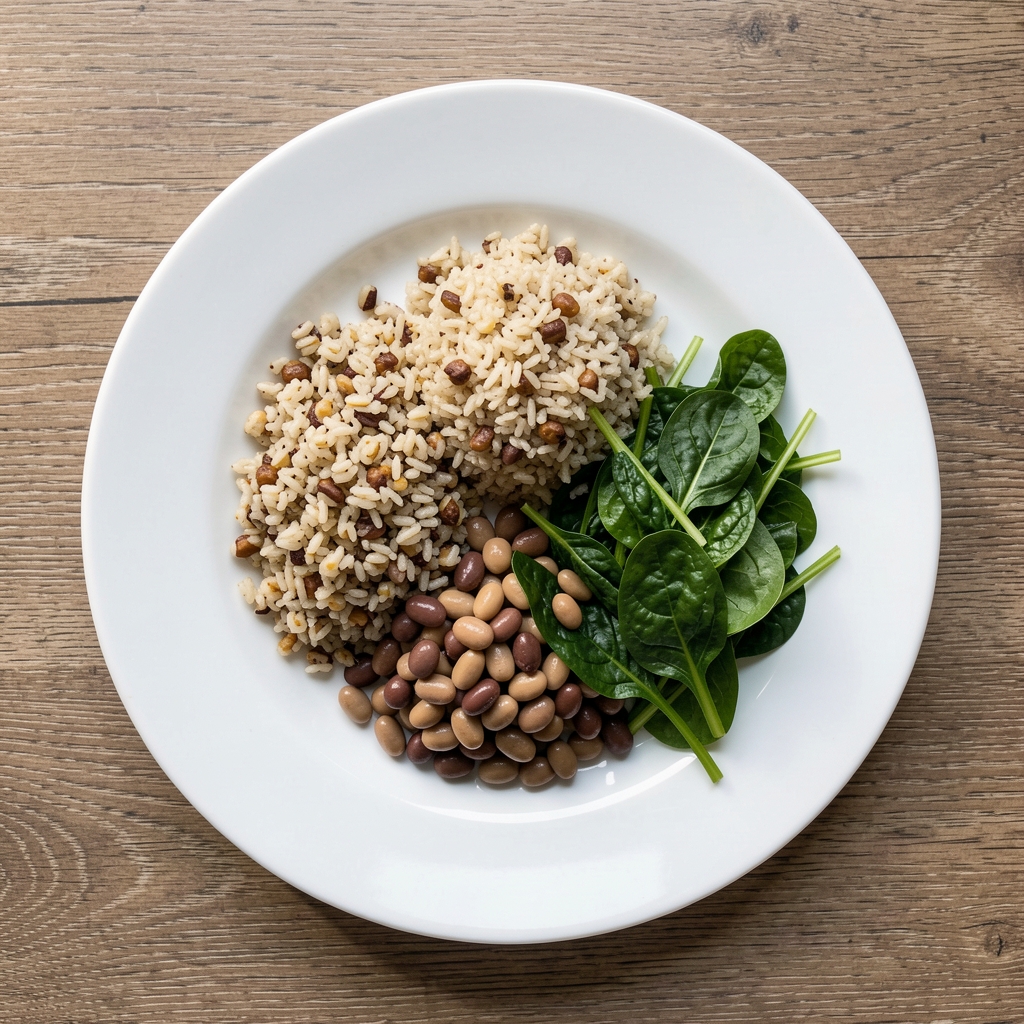
Portion sizes rarely announce themselves. They accumulate invisibly — shaped by the geometry of the plate, the depth of the bowl, the height of the pour, and the invisible pressure of social convention or distraction. What we eat is visible. How much we eat is surprisingly difficult to observe without deliberate effort. This editorial explores what happens when that effort is made — and what it tends to reveal about the relationship between daily meal structure and gradual weight change.
The Plate as Architecture
To speak of portion awareness is, in one sense, to speak of the architecture of the plate. How the various components of a meal are proportioned — the ratio of protein to carbohydrate to vegetable, the presence or absence of a fibre-rich base, the size of the serving relative to hunger level — constitutes an architectural decision that is made, usually unreflectively, every time a meal is assembled.
Nutritional research has consistently identified portion size as a significant variable in caloric intake, independent of food quality. Two plates with broadly identical food compositions can represent meaningfully different caloric contributions depending on the quantity of food served. This effect is compounded by the well-documented observation that people tend to eat most of what is placed before them — a finding robust enough to have shaped much of the contemporary nutritional guidance around plate size and serving volume.
What makes portion awareness particularly relevant to long-term weight outcomes is not its effect on any single meal but its cumulative influence on the weekly nutritional pattern. A consistent tendency to serve generous portions of dense, caloric foods — pasta, rice, meat, cheese — produces a different nutritional baseline over months than a tendency towards more moderate serving volumes, even when the food categories themselves remain unchanged.
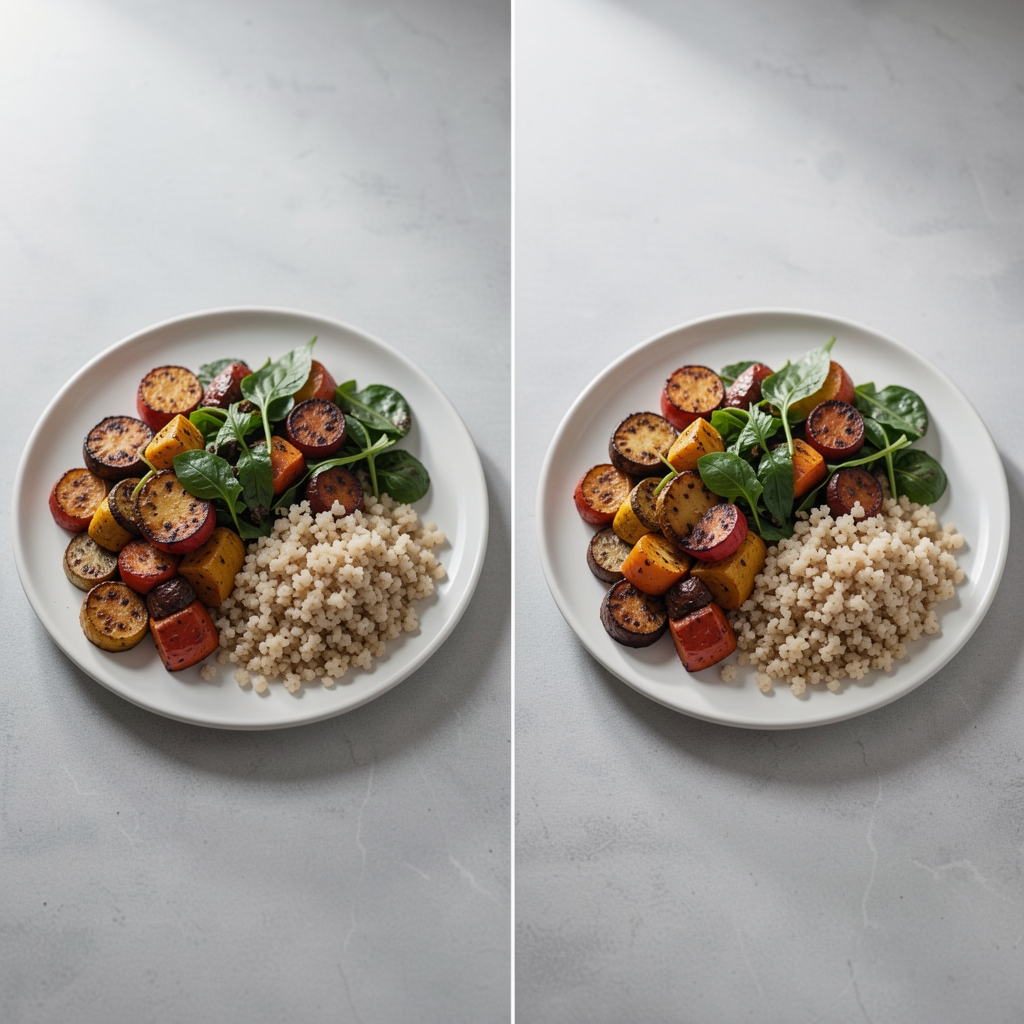
The same meal, two portions — the difference is structural, not qualitative
How Portions Shift Over Time
One of the more striking observations from nutritional practice is how reliably portions increase over time without conscious awareness. This phenomenon — sometimes described as portion drift — tends to operate through a series of small, individually imperceptible increments. The pasta serving that is slightly larger than usual becomes the new normal. The bowl that was once filled two-thirds becomes filled three-quarters. The additional slice of bread that accompanied dinner on weekends begins to appear during the week as well.
Portion drift is not a failure of will. It is a natural consequence of habituation — the psychological process by which the familiar becomes the expected. Once a serving size has been encountered enough times, it begins to feel appropriate regardless of whether it matches the body's actual requirements. The recalibration of what "enough" looks like is one of the primary values of deliberate portion awareness.
For the reader who tracks their portions deliberately for the first time — noting not calories but visual proportions, plate coverage, and serving volumes — the experience of recalibration tends to be the same: what felt like a moderate serving is revealed to be substantially larger than a nourishing and sufficient quantity would require. This recognition, when it comes, is rarely accompanied by deprivation. It is more often accompanied by the simple awareness that the body was, in fact, adequately nourished at a smaller quantity than habit had established.
"Portion awareness is not about counting or restricting. It is about making the invisible visible — returning intentionality to a decision that habit had made automatic." — Imogen Marsden, Elgon Press
The Role of Meal Rhythm in Portion Regulation
The architecture of a daily meal is not confined to the composition of the plate. It extends to the rhythm across the day — the timing of meals, the regularity of eating occasions, and the presence or absence of gaps between them. Research on meal timing and its relationship to portion regulation is more complex than the food-quality literature, but several consistent patterns emerge.
Longer gaps between eating occasions tend to increase appetite at the subsequent meal, which correlates with both larger portion sizes and faster eating rates — both of which are associated with higher caloric intake. Regular meal timing, by contrast, tends to regulate appetite more evenly across the day, reducing the physiological pressure towards large portions at any single meal. This does not require rigid scheduling; it requires sufficient consistency that the body maintains a predictable hunger-satiety rhythm.
In the context of weight awareness, the finding has a simple practical implication: eating at broadly consistent intervals tends to reduce the intensity of appetite at each meal, which naturally supports more moderate portions. The common experience of arriving at dinner very hungry after a long afternoon without food — and eating substantially more than planned — illustrates the mechanism in reverse.

Slowing the Pace of Eating
Alongside portion size and meal rhythm, the pace of eating has received attention in nutritional research as a variable in satiety and total intake. The physiological process by which the body registers fullness is not instantaneous — it operates on a delay of roughly fifteen to twenty minutes between the consumption of food and the arrival of satiety signals at a perceptible level. A fast eater, consistently consuming meals in under ten minutes, frequently finishes eating before those signals have had time to accumulate.
The editorial observation here aligns with the research: slowing the pace of meals — through deliberate pausing, careful chewing, or simply removing screens and other distractions from the eating environment — tends to produce a natural reduction in the volume consumed. This is not an effort to eat less; it is an effort to eat at a pace that allows satiety to register before the plate is cleared.
Combined with a return to a more moderate default portion size, a slower eating pace represents one of the more practically accessible adjustments available to someone seeking a more deliberate relationship with their daily nutritional intake. Neither requires specialist knowledge or a departure from normal food choices. Both operate at the level of how we eat, not what we eat — and that distinction is, in many cases, the more immediate lever for gradual weight awareness.
Movement, Activity, and the Daily Nutritional Equation
No editorial handling of portion awareness and meal architecture would be complete without acknowledging the role of physical activity in the daily nutritional equation. Regular movement — whether structured sport, daily walking, or consistent low-intensity activity — does not merely influence caloric expenditure. It also appears to affect appetite regulation and the body's processing of nutrients in ways that interact with portion size and meal composition.
The practical nutritional observation is this: those who maintain a consistent active lifestyle tend to demonstrate better natural regulation of appetite — a greater sensitivity to hunger and satiety signals — than those who are largely sedentary. This does not mean that more activity automatically produces better portion regulation, but there is a consistent directional relationship that is worth noting in the context of weight and lifestyle balance.
The interaction between movement and eating patterns is one of the areas where Elgon Press intends to develop further editorial coverage in 2026. The nutritional literature here is evolving and the practical implications for everyday life are considerable. For now, the core observation stands: an active daily rhythm appears to support a more calibrated relationship with portion awareness and nutritional need.
Observations on Portion Practice
- — Portions shift over time through habituation without conscious awareness — this is portion drift, and it is a predictable pattern, not a personal failing.
- — Deliberate portion observation — noting visual proportions and plate coverage — tends to reveal that habitual serving sizes exceed comfortable satiety more often than not.
- — Regular meal timing reduces the intensity of appetite at each eating occasion, naturally supporting more moderate portions.
- — A slower eating pace allows satiety signals to accumulate before the plate is cleared, reducing total intake without deliberate restriction.
- — Regular physical activity appears to support improved appetite sensitivity, which in turn supports more natural portion regulation.
Articles published on Elgon Press are editorial in nature and reflect the writers' observations on everyday nutrition practices and weight awareness. The content is not intended as professional advice, nor as guidance for the management of any specific condition. Readers with specific concerns about their daily routines are encouraged to speak with a qualified wellness professional.